Written by Libby Miller and Tarim.
Wouldn’t it be amazing if we could see the locations of all the sparrows in Bristol, in real time? Or all the goldfinches, or blackbirds? And we could see what times of day they visit which part of the city? Where they particularly like to go? Whether their numbers were increasing or decreasing?
Recently we held a workshop at KWMC about Listening to Nature – for people interested in finding out how to use technology to detect and identify nature on their doorsteps.
We wanted to find out if people were interested in finding out about animals (especially birds) that are close to them but perhaps they don’t notice.
You may have used the Merlin app to identify birds, or perhaps iNaturalist to identify plants. These apps use Machine Learning technology, but of course you have to be present with your phone to find out what’s there.
We held this workshop because we realised that with new technology and a new network we’re building, we might be able to make a Bristol Web of Birds, and we wanted to know if others were interested in it, or if it was just us!
Using AI to identify birds
With advances in machine learning and AI, it’s now possible for tiny cheap computers like Raspberry Pis to determine the species of some animals using just audio or just video, so you don’t need your phone.
At Bristol Wireless we’re creating a network that can send small amounts of data from around Bristol to one central place, in a way that’s not owned by the big telcos, and that’s free to connect to. The technology we are using is called ‘LoRaWAN’ which can receive data from a large distance compared with other similar technologies. It’s usually used for things like air quality sensors and similar cases where small pieces of data collected over a wide area are useful (it can’t do video or audio).
Here’s Tarim putting a computer on a tower block in Bedminster to collect data:

So to connect up these two things – if we ran the software on small cheap computers instead of phones, and had lots of them, then we could find out about the wildlife that’s all around us in Bristol, using our new LoRaWAN network to send small pieces of text like “at 7.05am a sparrow was heard in Knowle West with confidence 0.7”.
But first we wanted to know if anyone was actually interested in this. So we ran a workshop with the kind assistance of Simone from KWMC, and with funds from Jo Walsh’s 2025 Software Sustainability Institute Fellowship.
In the workshop we did three things
- asked people to make posters of the kinds of animals they would like to find out about and what they’d like to know
- made ‘birdlisteners’ using the BirdnetPi Open Source software
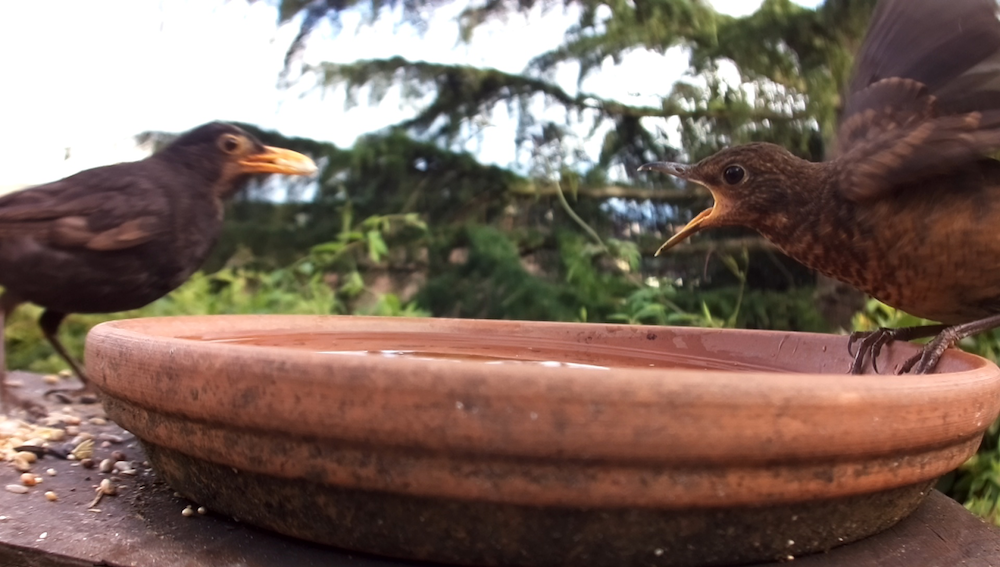
- made ‘birdwatchers’ using MyNatureWatch Open Source software
In the process Tarim and I learned a lot about what people wanted to find out about the animals around them. You can see some of the beautifully illustrated ideas below:

Meanwhile, the participants discovered how to put together Raspberry Pi-based listeners and watchers.

They also discovered some of the interesting problems you tend to encounter (in particular, it’s amazing that such small computers can do bird identification – but they do sometimes get it wrong, like all AI-based systems).
So what did we learn?
Feedback was very positive. People mentioned getting a better handle on the technology and becoming less scared of it, and enjoying connecting with others who are interested in nature.
We got many questions about the data too. People were interested in a variety of creatures – invertibrates, foxes, rabbits, hedgehogs, goats. What happens to them in each season? What do they need to survive? How do they interact together? And then specifically for birds, what kinds sing most and in what season? When do they sing at night and during which hours do they sing the most? What species thrive in cultvated versus wilder places? What variety of species are there in gardens, parks and community spaces?
Some were interested in taking devices home to see what nature was close to them, and we hope to be able to offer the devices on loan for people to do this, though there are a few things we need to overcome first. In particular, although we suggested some options (the Merlin app and trailcams) for people who aren’t yet confident with technology, getting a device up and running like the ones we made with a Raspberry Pi is still quite difficult, and we’d like to make this easier.
A participant mentioned “technology in service of nature and communities” in their feedback, which I think should be our motto for this project.
Next Steps
We would love to do other activities in this area, so let us know if you have ideas, interested organisations, or funding! Email: hello@nicecupoftea.org