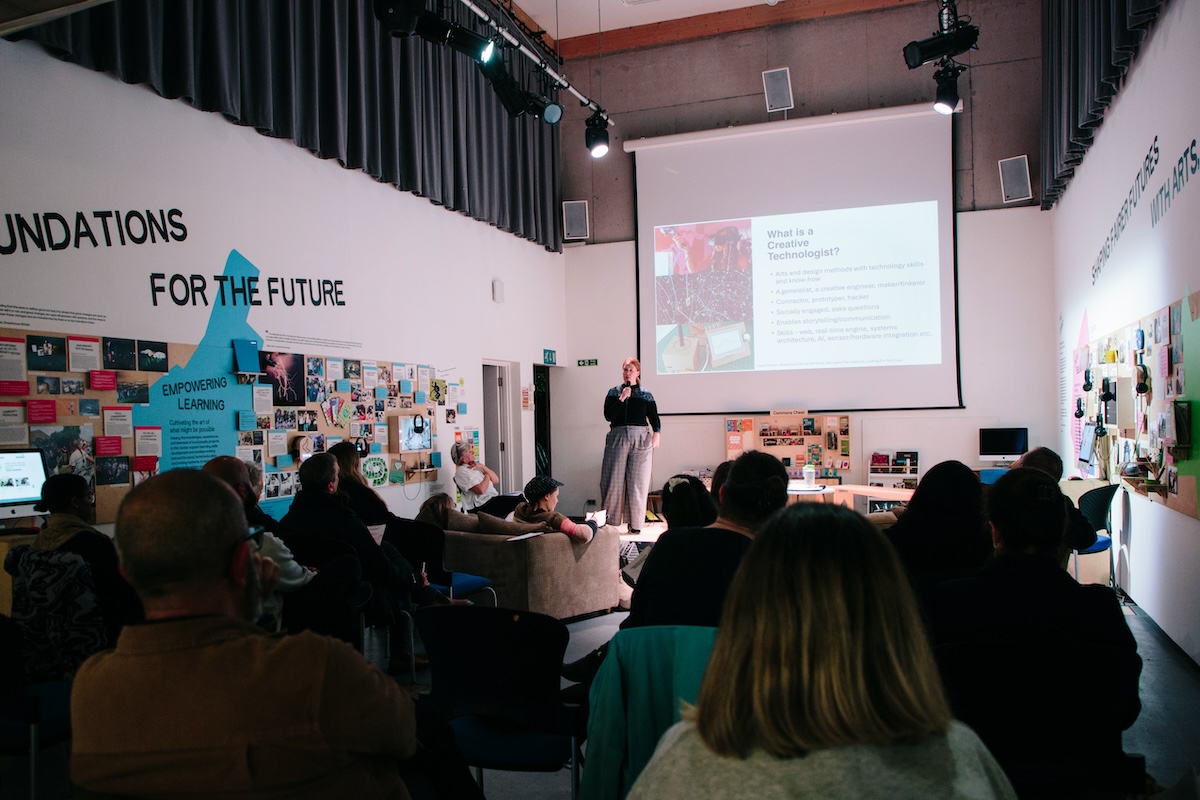
What skills will the next generation need? How can working-class communities shape what’s next? New career pathways exist, but who is benefiting?
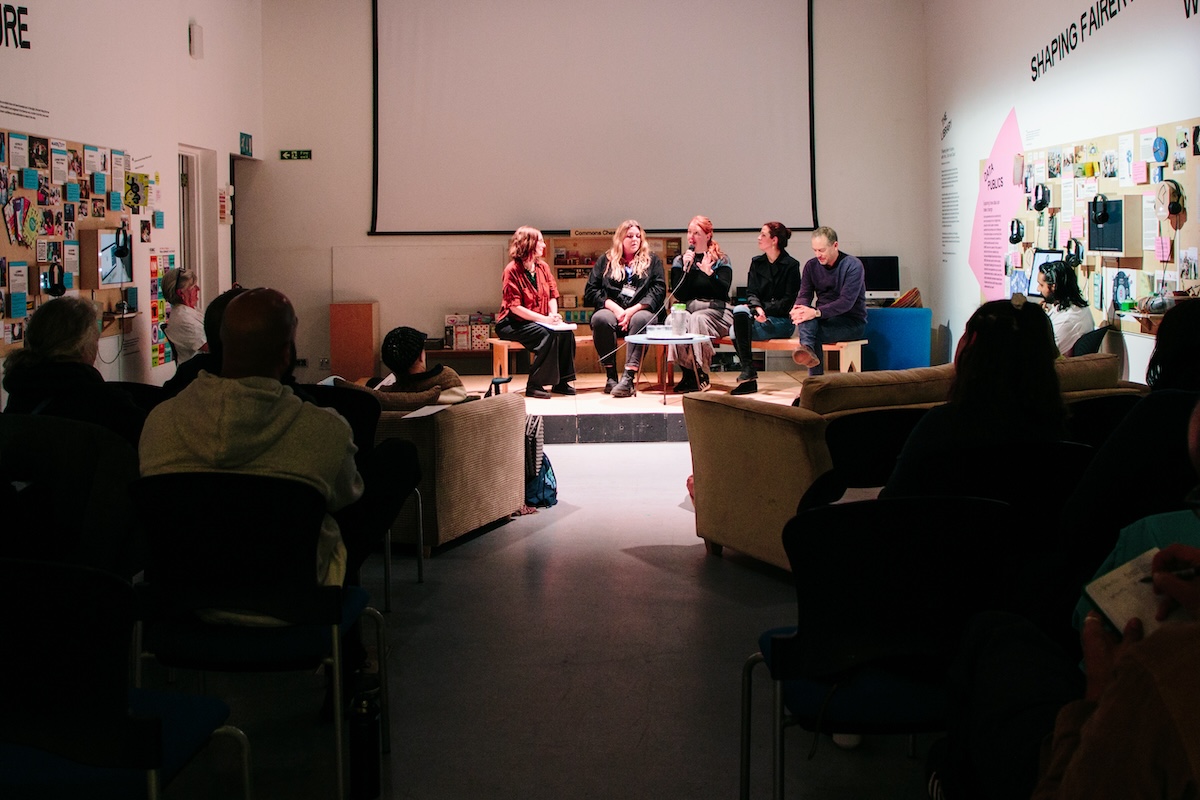
In November 2025, we brought together community leaders, educators and creative thinkers for an evening of honest conversation, radical imagination, and a shared commitment to building futures where everyone can thrive.
Set against the backdrop of our Foundations for the Future exhibition – charting nearly 30 years of KWMC’s work in creativity, technology and social justice – the event invited us to look back at what’s worked, confront what’s broken, and imagine the futures our communities deserve.
Below are some highlights from the night…
Young people thrive when they can learn in ways that centre their passions, when barriers are removed, and when creativity is valued as much as technology.
KWMC founder Carolyn Hassan opened the night by reflecting on the organisation’s early years: from make-shift darkrooms at Filwood Community Centre to award-winning youth films, coding clubs, robotics workshops, music labs, and the beginnings of digital fabrication at The Factory.
Across decades, the most successful learning experiences had one thing in common: they were co-created with the community, not delivered to it.
Technology is a tool for liberation. Communication is a human right.
Next, Mother Cyborg – an artist, technologist, community organiser and educator – shared lessons from Detroit, speaking about community-led tech infrastructures, mutual aid networks, and the need to reclaim technology as a tool for justice rather than surveillance or exclusion. She advocated for building futures with what we have, centring local strengths, and refusing narratives that say tech innovation only comes from the top. She asked questions like, ‘How can creativity, art and media help create connections and build relationships?’ and ‘How can tech help us create opportunities to connect?’.
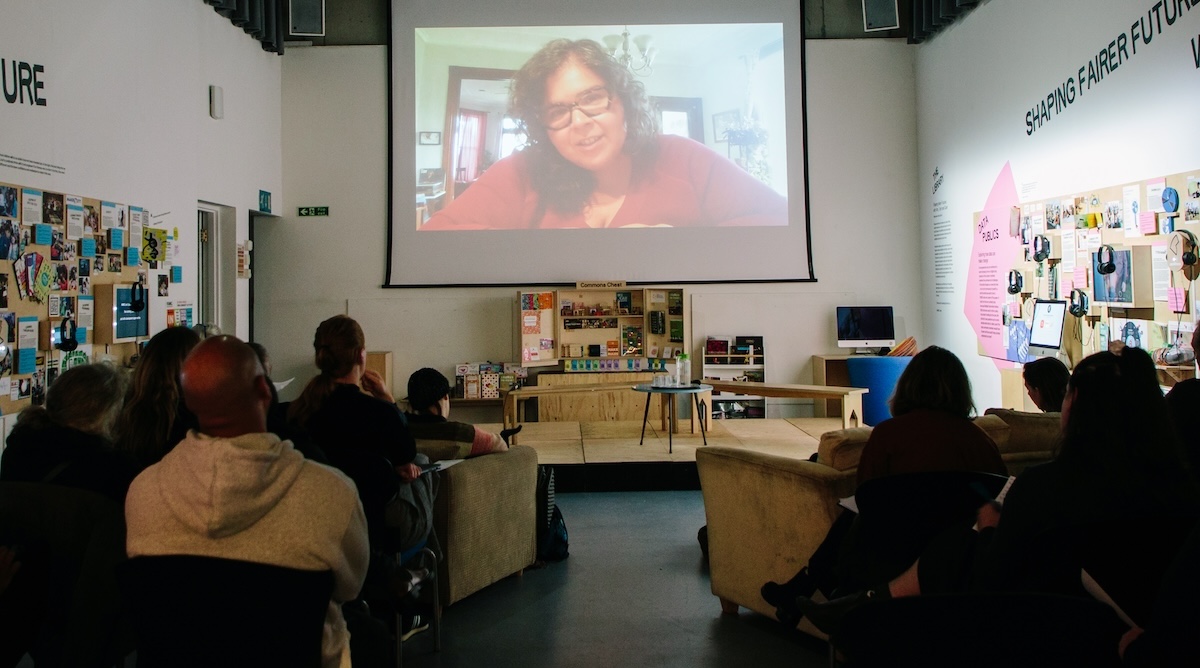
If we don’t intervene now, the digital future will deepen the inequalities already shaping our economy.
Entrepreneur and labour market expert Zara Nanu MBE grounded the conversation in hard data. Between 2025-2030, the global labour market is predicted to see 170 million new jobs created and 92 million displaced, a shift as significant as past transitions from steam engines to electricity.
However, she warned that the fastest-growing jobs (e.g. AI, data science, software engineering) are highly paid and overwhelmingly dominated by white men. Meanwhile, many of the fastest-declining roles (e.g. admin assistants, data-entry clerks) are lower paid and largely held by women and other marginalised demographics. Without intervention, the digital economy risks deepening existing inequalities.
Zara also drew attention to the “vast essential economy” which powers society but remains undervalued: the millions of people working in care, food service, teaching, construction, farming – roles that rely on human skills rather than technology. We must build a system that values the human skills technology can’t replace.
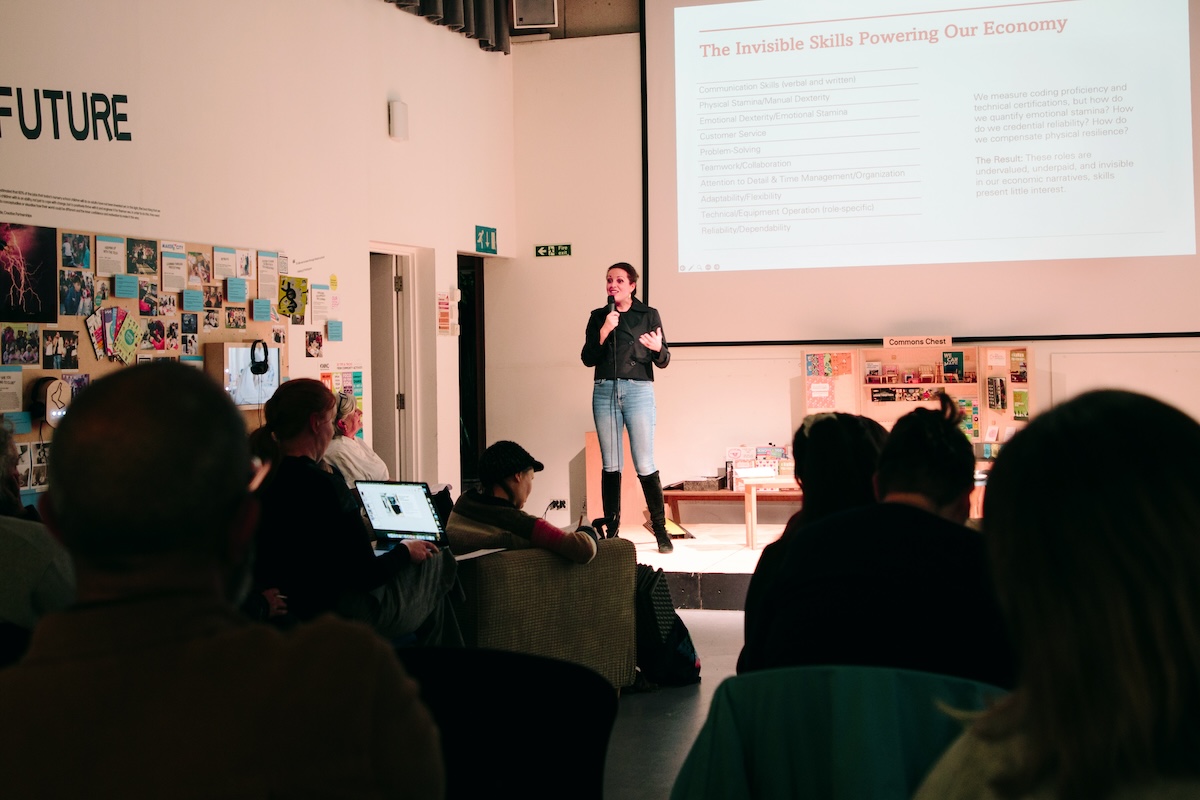
Can we change the current system, or do we need to build a new one altogether?
Derek Tanner from Black South West Network (BSWN) challenged us to go further: skills programmes alone cannot offset systemic discrimination. Inclusion requires redesigning the systems that create exclusion in the first place.
He shared how BSWN programmes grow confidence and community, stressing how we need to value lived experience more over academic careers. If things remain the same, the people developing our technology won’t be more diverse and will continue to serve the same agendas.
Creativity is essential not optional. It’s a core skill for understanding the world, building confidence, and making meaning in uncertain times.
Sarah Franke from Trinity Community Arts reminded us that creativity isn’t a luxury in education, it’s fundamental to how children understand themselves and the world.
Through the Cultural Alliance Programme, she’s seen how sustained creative learning builds confidence, communication, imagination and emotional wellbeing, especially for children who don’t thrive through traditional academic routes. With support and truly inclusive design, every child can have meaningful access to creativity, not just the ones who can afford it.
However, she also highlighted the barriers: curriculum pressures that squeeze out arts time, a lack of specialist teachers, economic inequality, and children who have simply never been given the chance to be creative.
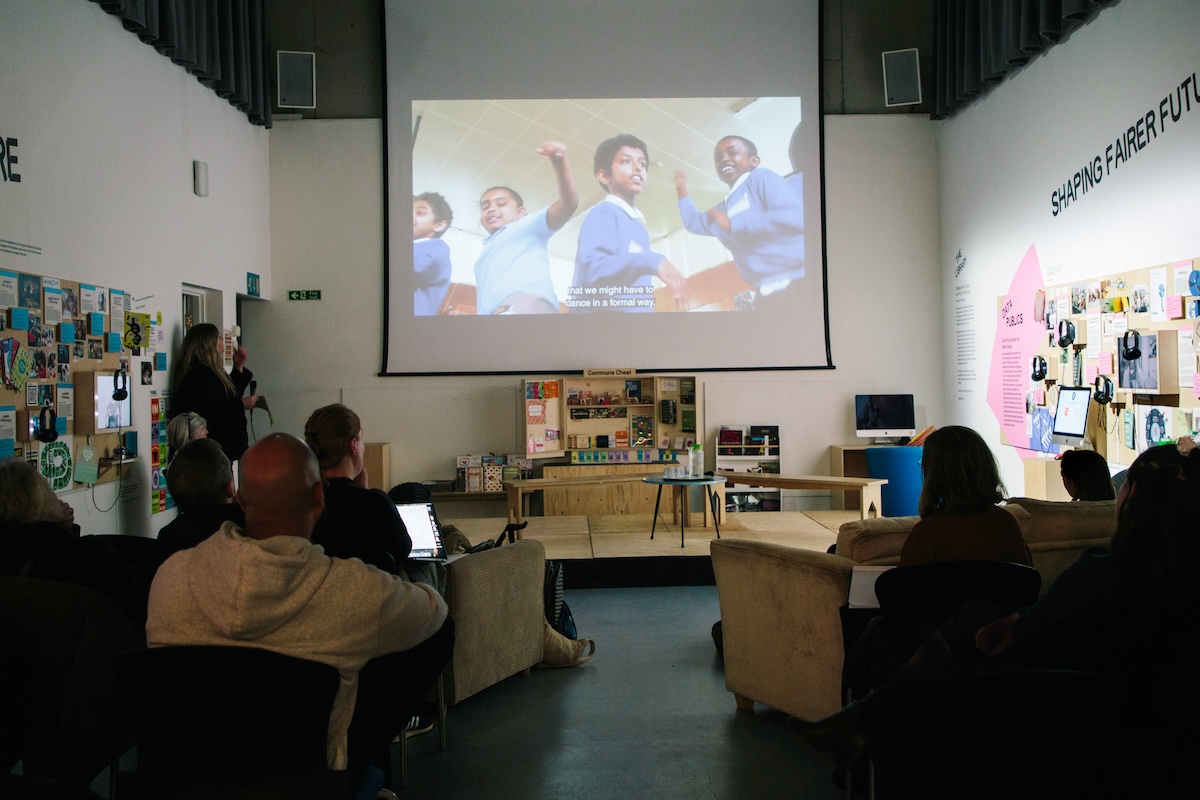
The creative tech sector has a vast – and growing – skills gap.
Artist-technologist Coral Manton shared the challenges she sees daily including: lack of diversity, limited entry routes, privatisation of repair and tinkering skills, and a generation growing up on mobile devices without access to laptops or tools to actually make the technology they’re using.
She traced back her own history with KWMC – including the birth of Women Reclaiming AI – and urged the sector to rethink how talent is nurtured, supported and retained.
Coral explored a fast-emerging category of work: Creative Technologist roles. These jobs already appear across sectors – from health, heritage, media and manufacturing – although they often come under different titles. What unites them is a blend of creative problem-solving, digital skills, experimentation, prototyping, critical thinking and the ability to work across disciplines.
There is rapidly growing demand for people who can operate in this hybrid space, yet very little public understanding of what these roles are, how people access them, or how they connect art, technology and community need.
This creates a major opportunity for organisations like KWMC. With our history of hands-on experimentation, artist-led research and community-centred digital learning, we are well placed to improve access to these jobs, broadening who gets to shape the technologies of the future.
Who gets to tell the stories of our future? And how do we make sure working-class communities can afford to participate?
Filmmaker Noomi Yates celebrated the achievements of programmes like KWMC’s Junior Digital Producer programme, while acknowledging the truth: it is becoming harder, not easier, for early-career creatives in Bristol to sustain a livelihood.
Increasing unemployment means that under-employment is on the rise, with experienced professionals taking lower paid, lower-level jobs just to stay afloat – meaning less entry-level jobs for those who need them. This also has a knock-on effect on the communities whose stories need to be heard, as there are less resources to platform their voices.
What Would Actually Make a Difference Today?
The panel discussed what real, immediate change looks like:
- Co-creating with communities, not just consulting them
- Paying people properly and recognising invisible labour
- Designing learning that adapts to individual needs
- Rebuilding local organising structures that allow people to advocate for themselves
- Creating equitable, low-barrier pathways into arts and tech careers
- Investing in community centres as hubs of connection before tech even enters the room
The panel closed on the question ‘in just one word, if you were to envision a hopeful digital future, what would it look like?’ Their responses: Safe. Local. Feminist. Fair.
Follow-Up Workshop
We hosted a follow-up workshop a week later, bringing together practitioners, educators and organisers to move from ideas into practical questions about how learning, creativity and technology could better serve our communities now.
The workshop opened with a provocation from Dee Halligan, Co-founder and Director of We Go Forth, who designs learning models that widen access to skills in a rapidly changing world. Drawing on projects where young people have co-designed exhibitions, newspapers, programmes and events as well as community-rooted, globally connected initiatives, Dee made a powerful case for place-based, embodied and experiential learning.
She spoke about how our climate breakdown, economic precarity and the rise of far-right politics are not separate crises, but deeply linked. We need to acknowledge the climate emergency and develop skills that help communities adapt and build alternatives within planetary boundaries. This work, she argued, must connect to everyday life – e.g. energy bills, food, housing – and be rooted in shared learning journeys rather than fear or top-down expertise.
Dee also challenged arts and tech organisations to rethink their role in neighbourhoods: not always creating something ‘new’, but opening up existing spaces, inviting others to lead, and using creativity to build the capacities needed for systems thinking, adaptability and collective action.
Through embodied activities – including mapping and string exercises – participants explored confidence as a core outcome of learning, the value of action-based approaches, and the urgent need to better connect communities, universities and real job opportunities. The workshop also created space for collective questions such as ‘what could we do together that we cannot do alone?’
Across group discussions, several shared priorities emerged:
- The need for clear, tangible pathways into creative and technical work that people can trust because others have already walked them
- Paying people properly, redistributing power and recognising invisible labour
- Rebuilding systems rather than layering fixes onto broken ones
- Creating space for exploration and play – for everyone, not just professionals or young people
- Sharing resources and good-news stories more effectively
- Treating skills development as an essential part of the ecosystem, not an add-on
Participants also explored bigger, bolder questions: What would a Bristol curriculum look like if it reflected local lives and knowledge? What might a South Bristol cultural alliance enable? What needs to be ‘pruned’ or let go of so healthier systems can grow, with nature at the centre?
This workshop reinforced that the work ahead is not only about access to technology or jobs, but about how we learn, who leads, and what futures we collectively choose to build.
Next Steps
The event and workshop made one thing particularly clear: Bristol has an abundance of creativity, knowledge and community power. However, we need to organise, connect and invest differently if we want the digital future to belong to everyone.
When economic and political pressures intensify, there is space (and necessity) to rethink how we do things for ourselves. We must reconsider what technology is for, how it can genuinely support communities now, and what it means to embed new forms of ethics and morality into how we design and use tech.
At KWMC, we will continue opening up access to creative technologies, supporting young people to learn in ways that work for them, advocating for STEAM not just STEM, challenging systems that exclude talent, and working in solidarity with partners, practitioners and neighbours across the city. Innovation isn’t just for the early adopters or high achievers. It thrives when curiosity is supported at every level.
Change doesn’t happen through inspiration alone, but through collective action. If you want to get involved, learn more, or collaborate with us on shaping fairer futures, our doors are open. The Foundations for the Future exhibition remains open 9:30–5pm, Monday to Friday (as of January 2026). Please call or email ahead to check availability (enquiries@kwmc.org.uk / 0117 903 0444)