Written by Coral Manton.
In September 2025, I started a six-month Creative Technologist in Residence Fellowship at Knowle West Media Centre, funded and coordinated by MyWorld and Watershed. The aim of the fellowship is to deep dive into KWMC’s archives, exploring their past digital arts and tech practices and using this as a lens to map what matters now, as well as the new and continuing directions KWMC might explore.
For the last three months, I have immersed myself in KWMC’s archive through the materials created for their Foundations For The Future exhibition — an exhibition celebrating KWMC’s rich 30 year history of community-based media and technology, curated by KWMC’s Founder, Carolyn Hassan.


(Images: Foundations for the Future exhibition photographed by Ibi Feher)
Alongside this, I’ve been reflecting on future skills and the evolving role of the Creative Technologist. This included a panel at TechSpark’s Bristol Tech Fest that was coordinated around some of my ideas on creative technology and routes to work. Organised by KWMC and Watershed and Chaired by Martha King, KWMC Co-Director, the panel offered a valuable space to explore Creative Tech and access with experts in the field.
I was also a speaker at KWMC’s event Learning For a Class(Less) Digital Future, advocating for the potential of the role of the Creative Technologist for good and accessible jobs in the creative industries. This lead to participating in an incredibly active and inspiring workshop convened by KWMC, bringing together people from Trinity Arts, BFI Network, MUTI live, All Set West & Bottleyard, University of Bristol and Dee Haligan from Forth.
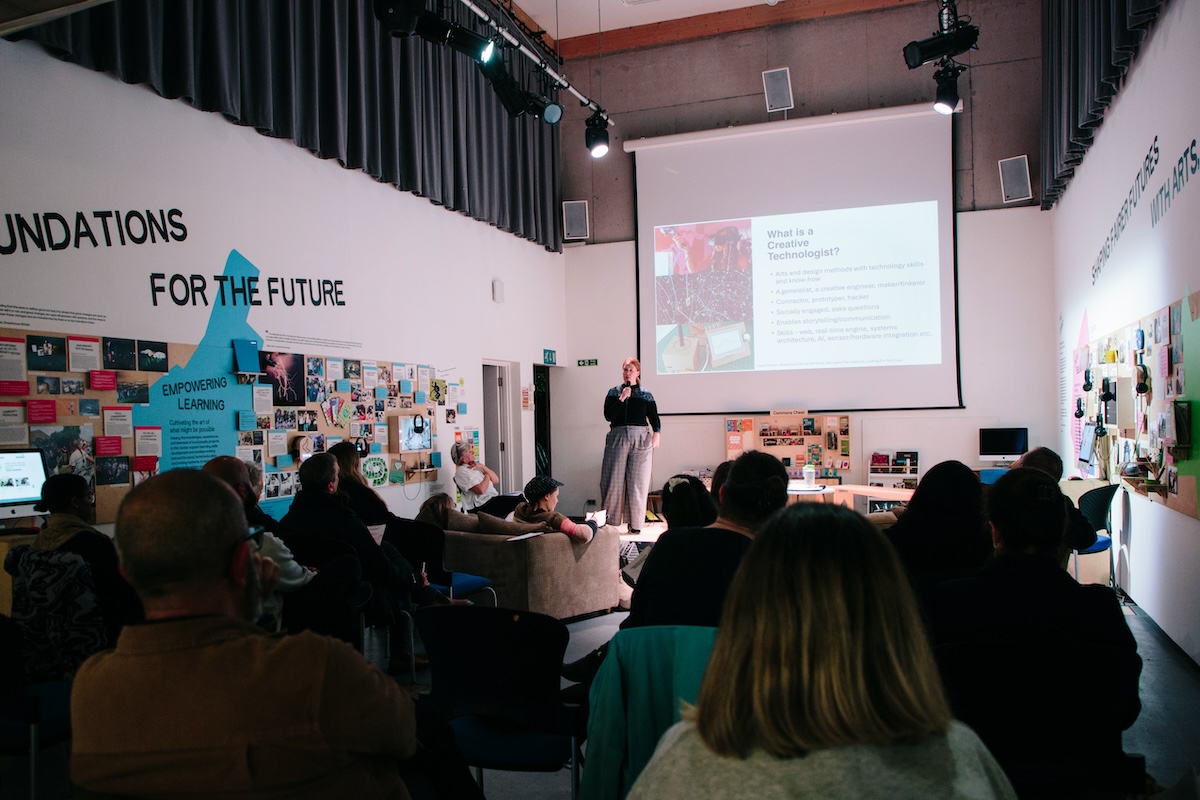
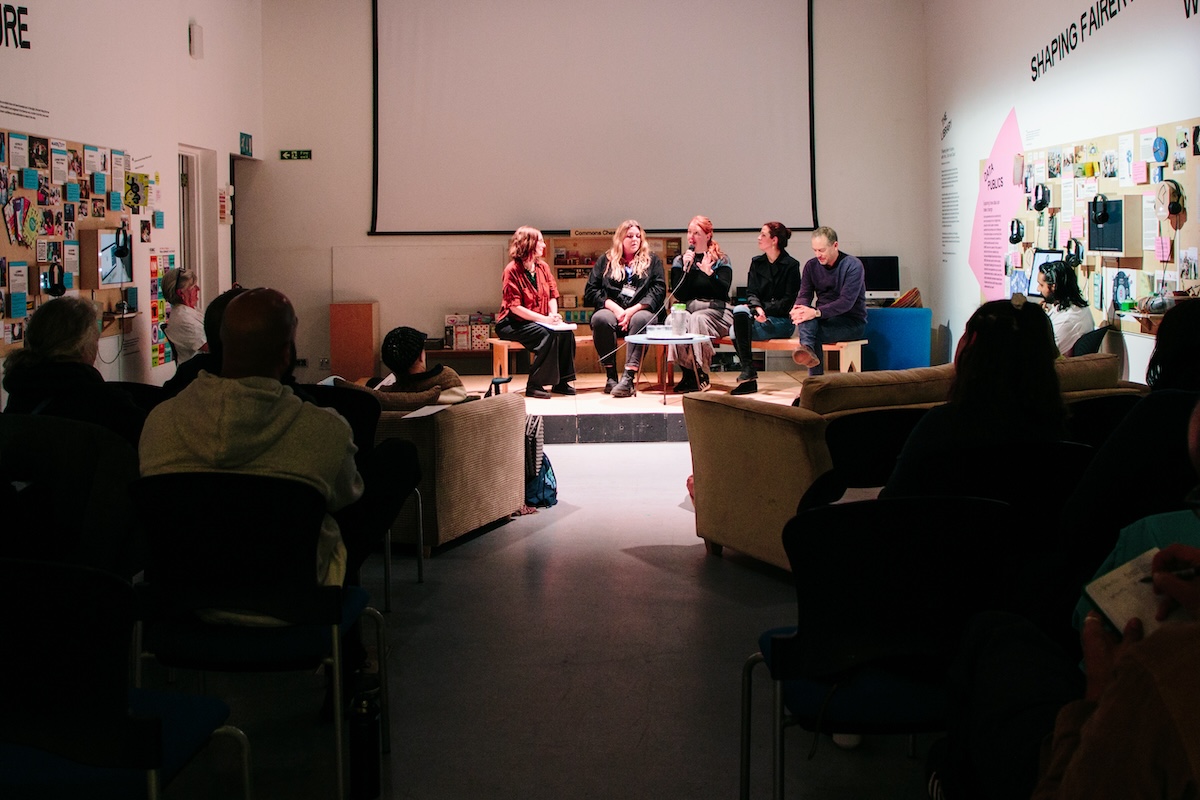
(Images: Coral speaking and on the panel at ‘Learning For a Class(Less) Digital Future’ photographed by Ibi Feher)
I also took part in two brilliant workshops led by Mother Cyborg, the Detroit-based technologist and community organisor — both organised by KWMC and University of Bristol.


(Image: Collaborative quilt made by participants in Mother Cyborg’s workshop with staff from KWMC and University of Bristol)
Following this research phase, ongoing conversations with the KWMC team, and early mapping work, the next phase of the residency will focus on identifying further avenues, technologies and processes for KWMC to explore, and publishing these in a form that other community spaces can use. I’ll also be working with the education team to run three workshops, and KWMC producers to experiment with a web and physically based forum using decentralised fediverse platforms, focused on building spaces for sharing and community cohesion – one of the key needs identified by Knowle West residents.
WeCanMake — Street Lighter
Alongside this research, I have been part of a project for the Retrofit Street project, led by WeCanMake in collaboration with KWMC. My role involved working with young people on Andover Road to explore creative tech, LEDs and play. The aims were:
- To celebrate the incredible light show that residents Ian and Anne create each year on their home — a much-loved display that raises money for charities and attracts visitors from across Bristol and beyond.
- To explore the power or LEDs and how light technologies are transforming our neighbourhoods.
- To bring people together through creative technology and play.
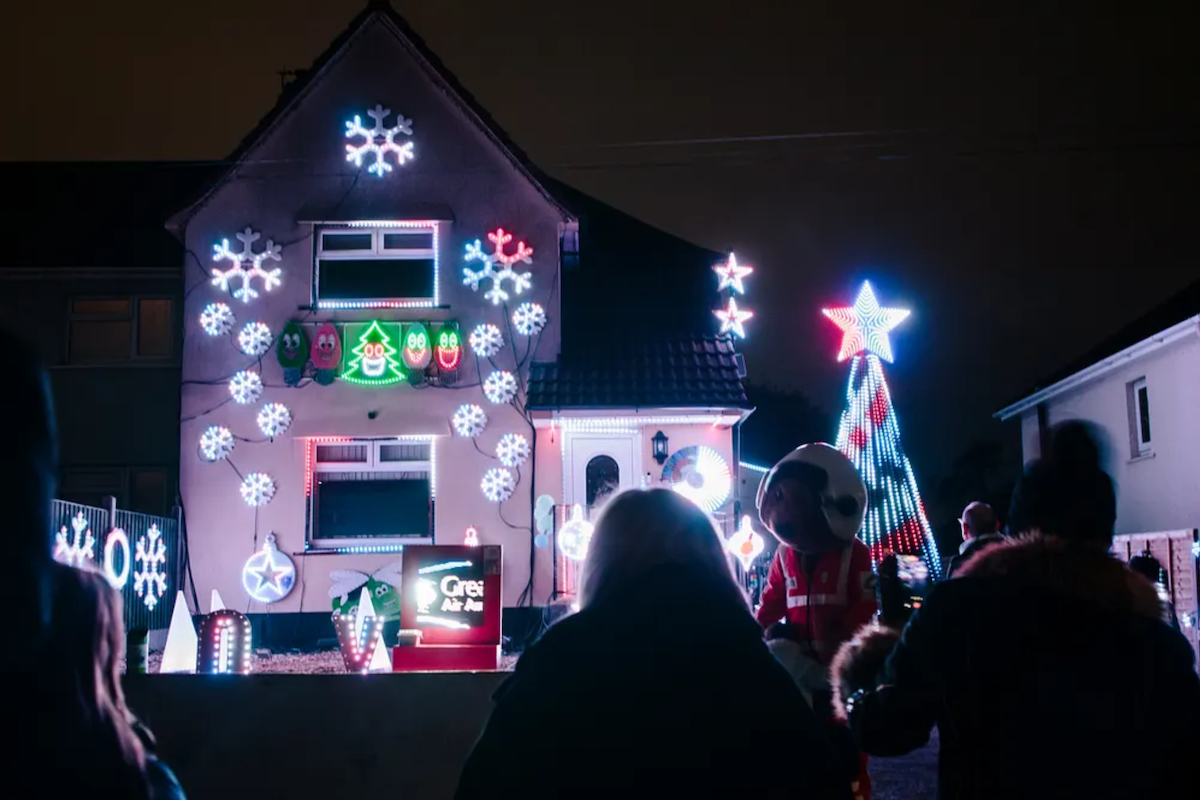
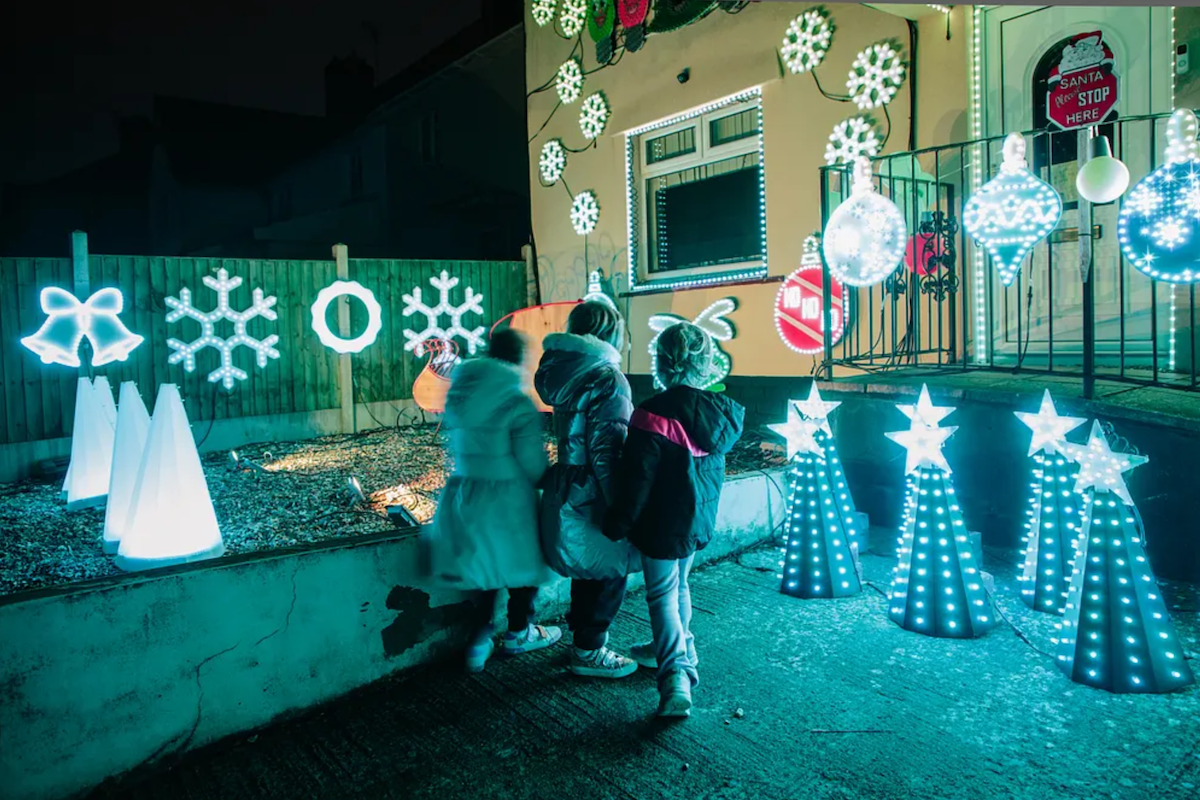
(Images: Ian and Anne’s Christmas light show on Andover Road, Knowle West. Photographer: Ibi Feher)
I had long been interested in making a game using a single LED strip — inspired by Robin Baumgarten’s Line Wobbler, festival light installations, and playful urban design. In my game design teaching, I’ve seen how visual complexity can sometimes distract from the joy of play; limiting the field of interaction to a strip of 144 pixels creates an elegant design constraint that encourages players and designers alike to focus on movement, timing, and collaboration.
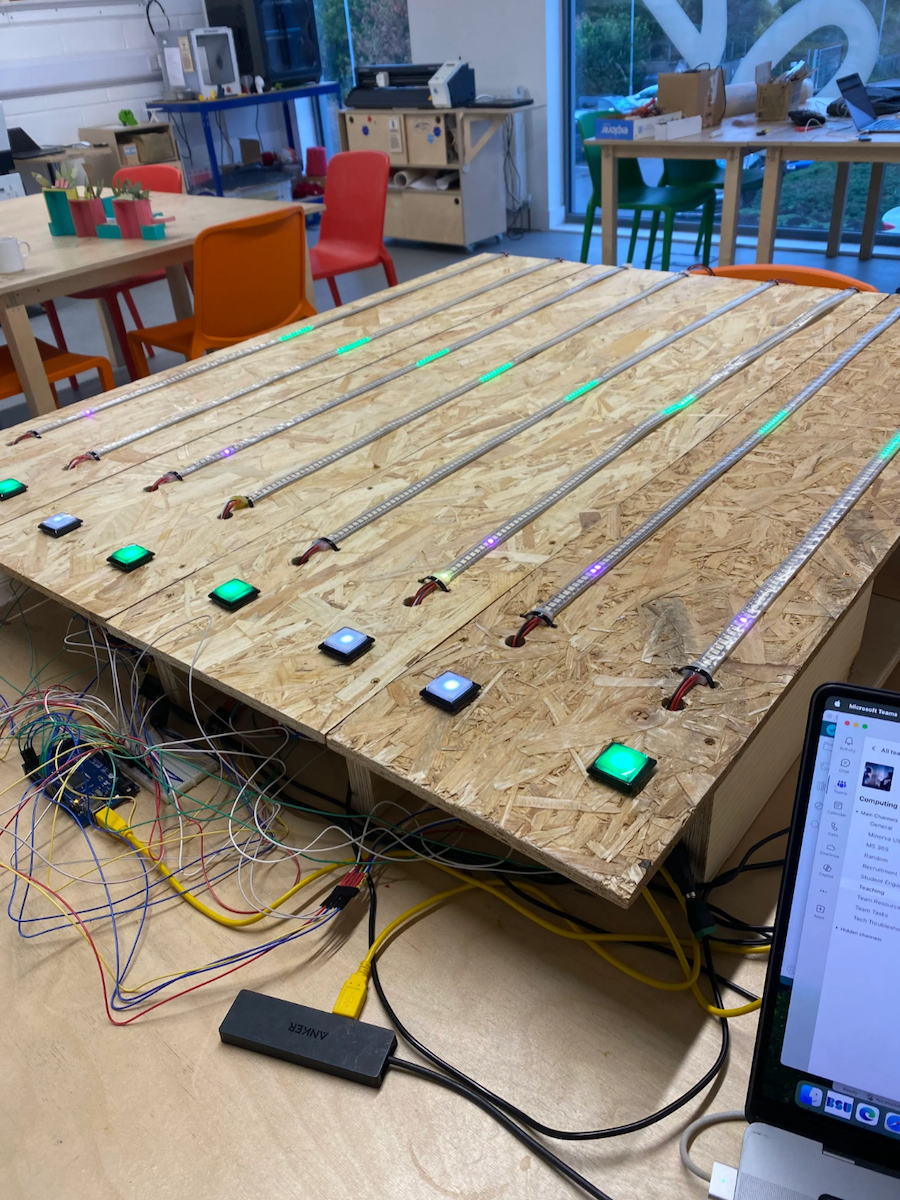
For this project, I decided to make a multiplayer game using eight LED strips and eight arcade buttons. Each player could “serve” or “bat” a ball — represented by a single yellow LED — sending it up their strip before it dropped down a random one for another player to return. A set of bottom LEDs acted as the paddle, allowing people to bat the ball back up into the air for the next person to catch.
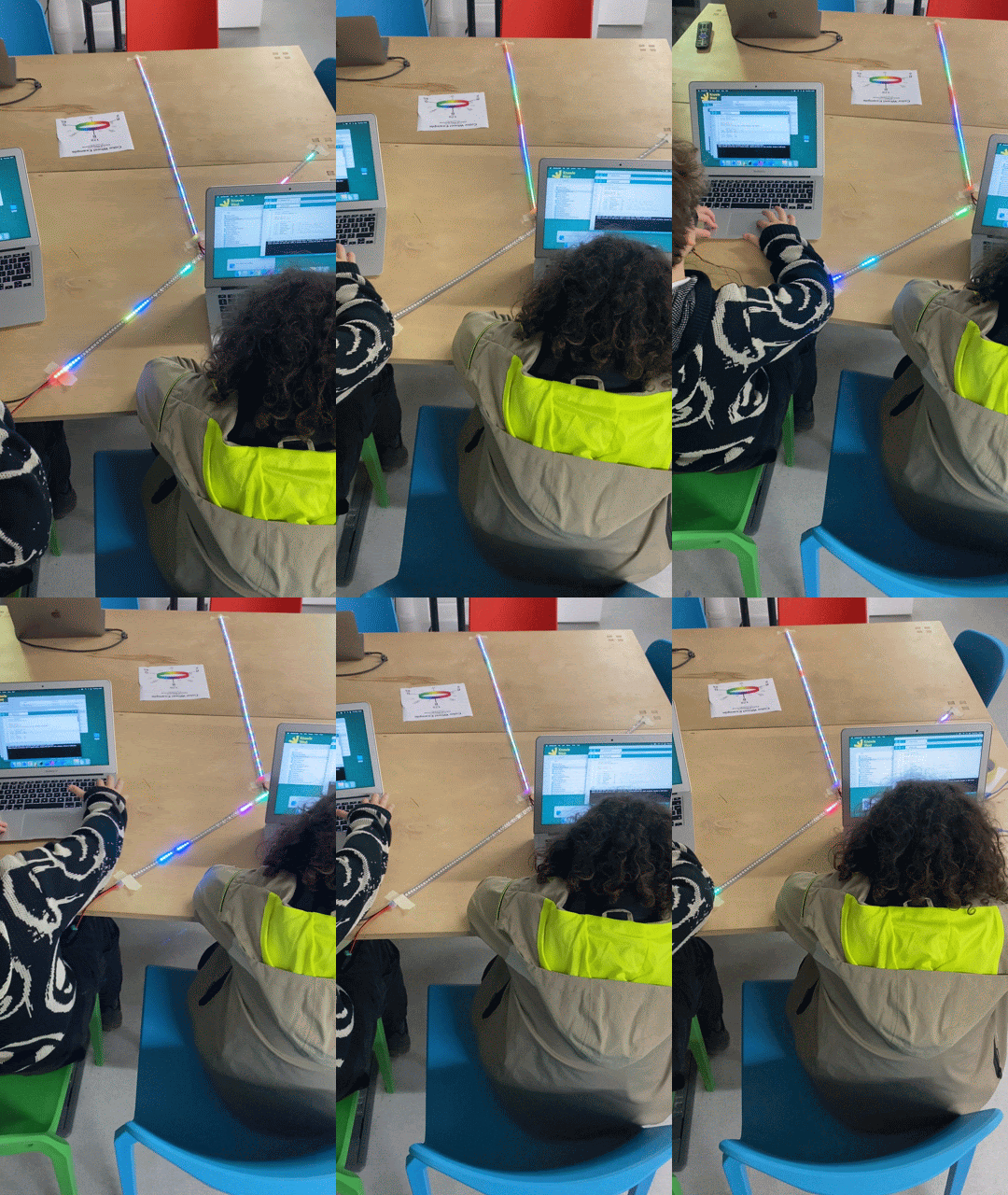
I then designed an LED programming and game design workshop for young people living on Andover Road. Together, we learned how LEDs work, programmed our own light effects, and co-created the rules of the game. We eventually settled on a collaborative rally-style game: players work together to keep the ball moving, with difficulty increasing over time by shrinking the paddle size and adjusting ball speed. Each completed rally triggers a celebratory animation across all eight strips. The group also created a scoring system and chose colours for each level — making the game their own.


(Image: Street Lighter prototype at The Factory, Knowle West)
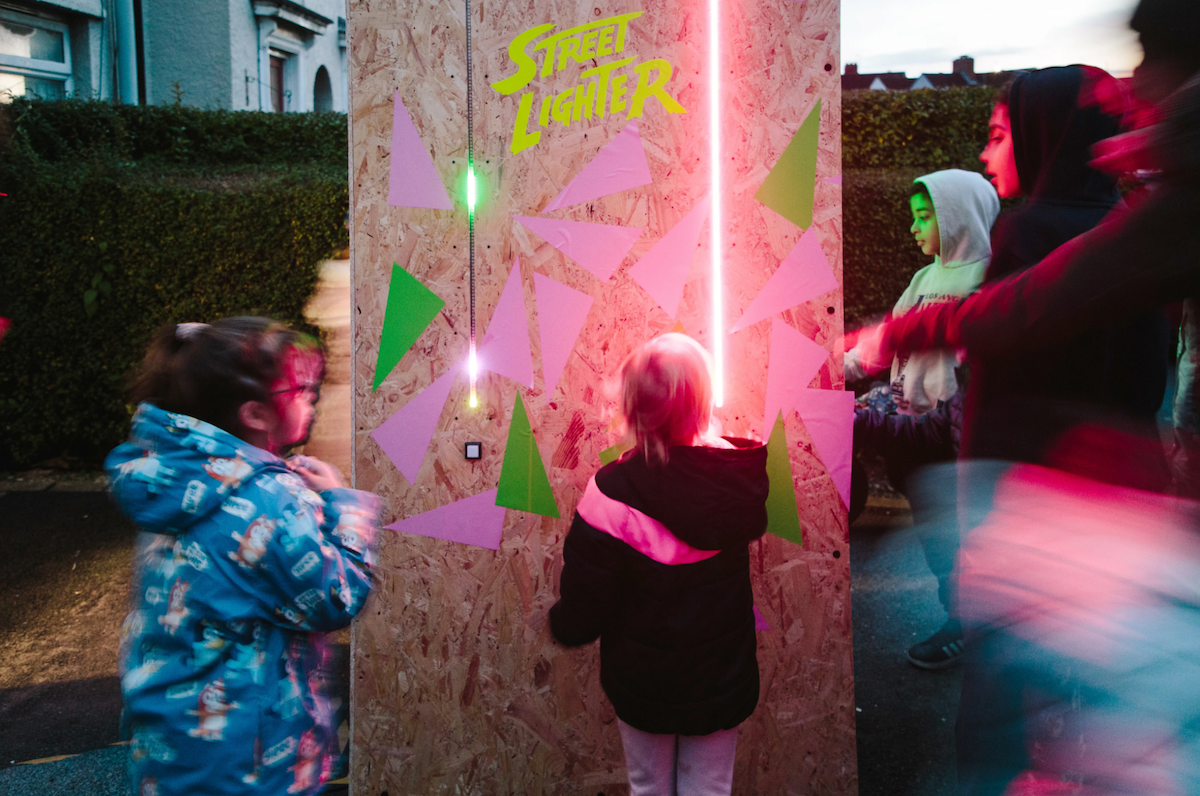
The game was made using an Arduino Mega, 8 x 144 neopixel strips, 8 x LED arcade buttons, a large light strip and a power supply and coded in an Arduino Sketch. Working with Chris Ingram, Production and Workshop Manager at KWMC, we designed a house-shaped frame for the game and came up with its brilliant name: Street Lighter. Chris produced the 3D design and used the facilities at The Factory to build the housing and finalise the electronics.


Street Lighter housing under construction by technician Chris Ingram at The Factory, Knowle West.
We premiered Street Lighter at the Retrofit Street launch event on Andover Road, right beside Ian and Anne’s spectacular Christmas LED display. The young people who helped create the game were there to try it out, along with families and neighbours. It ran non-stop all evening, with teams attempting to keep the rallies going long enough to trigger the celebratory animations — a joyful mix of play, collaboration, and community.


So what is next for Street Lighter…
I’d love to develop the game further as a workshop series focused on play, collaboration, and pixel-based design constraints — watch this space.
We would also love to take Street Lighter to other locations and light festivals, as a way of bringing a piece of Knowle West out into the wider world.