We’re honoured that Mother Cyborg (who was part of founding DiscoTechs in Detroit, USA) recently joined us all the way from Detroit to help us host the UK’s first DiscoTech right here in Knowle West!
What is a DiscoTech?
DiscoTechs (short for Discovering Tech) are a fun, interactive format for discovering technology in an accessible and playful way. They bring together creative tech ‘stations’, inviting people to bounce from one to another, staying for as long as they like and following their curiosity. Stations range from hands-on activities to relaxed conversations and spaces to exchange advice.
Music is central too – as the DiscoTech How To Guide reminds us, it helps “pump up the fun factor,” bringing energy to learning and encouraging people to move, connect and explore.
DiscoTechs were founded in 2010 in Detroit by the Digital Justice Coalition, which Mother Cyborg co-founded. They came from a need for spaces where people could discover technology together, learn at their own pace, and share skills and knowledge across communities.
DiscoTechs are about more than just having fun exploring tech. They are spaces to practise Digital Justice. The Digital Justice Principles centre the idea that communication is a fundamental human right. They focus on access (ensuring everyone can use and create technology), participation (prioritising those often excluded), common ownership (sharing knowledge and tools openly), and healthy communities (using technology to support collective wellbeing).
In practice, this means creating spaces where people teach and learn with each other, and explore their own needs, challenges and ideas. Rather than relying on external experts, DiscoTechs support people to solve problems collectively, building confidence, skills and power within the community.
DiscoTechs have the potential to provide a positive and hopeful experience for youth and seniors, creating a platform where we can teach and learn with each other in ways that allow us to investigate ourselves and our communities. This creates pathways toward solving problems collectively rather than waiting for others to solve them.
– Detroit Digital Justice Coalition
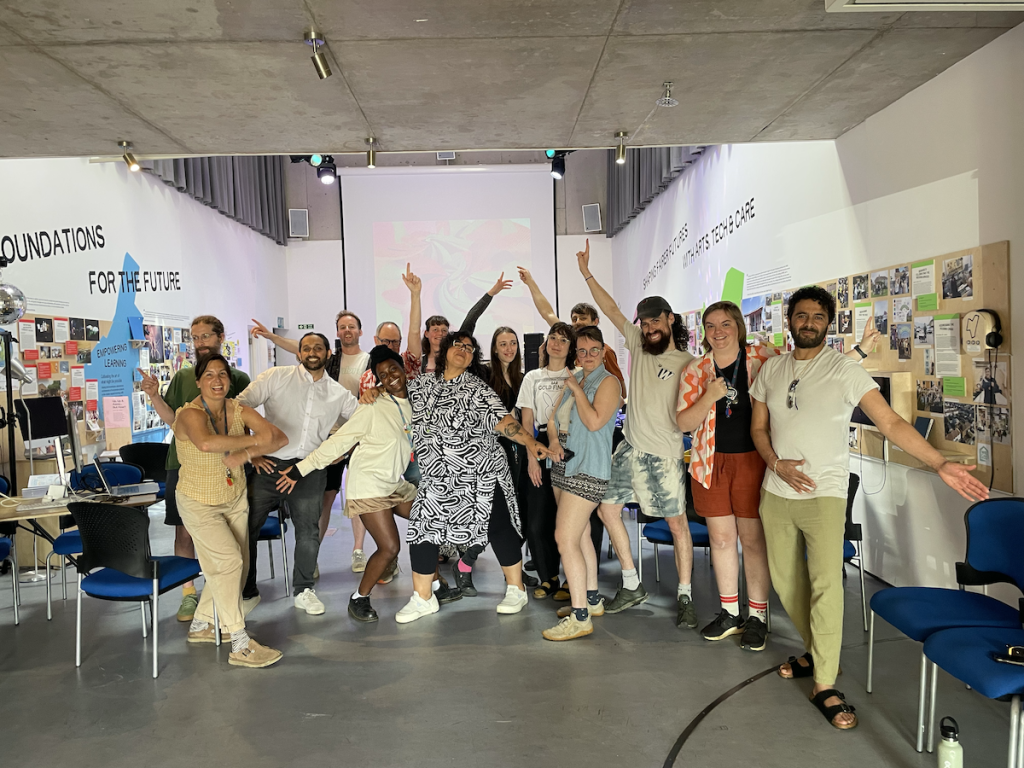
DiscoTech at KWMC
Our first DiscoTech in Knowle West June 2026 brought together hands-on creative tech, a live DJ and free dinner. We welcomed people of all ages, backgrounds, and experience-levels. All the stations were led by KWMC staff, sharing their passion projects, and external creatives, technologists or organisations local to Bristol (aside from Mother Cyborg of course!) because we know that knowledge, creativity and expertise already exist locally – we just need to create welcoming, open spaces where this can be shared.
Our stations:
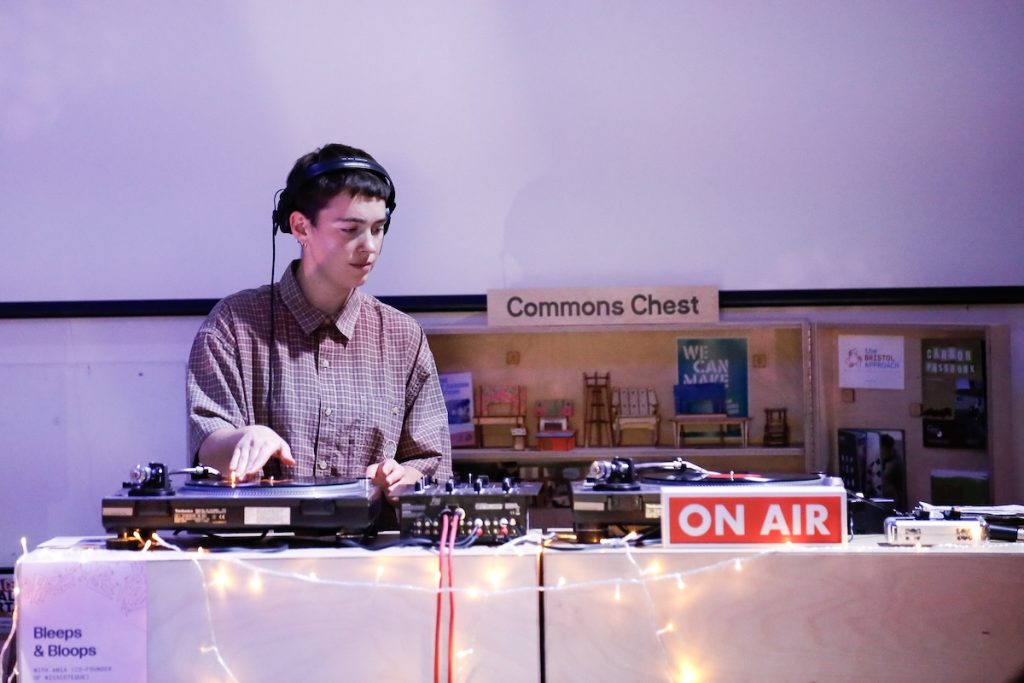
Throughout the afternoon, Misscoteque played a DJ set of downtempo oddities, synth pop and 80s electro with a robotic twist kept the energy flowing, helping to create a welcoming, shared atmosphere where people could connect, learn and spend time together.
Each of our stations were carefully designed to be fun and thought-provoking while tackling the Digital Justice Principles:
Access & Participation
Digital justice ensures that all members of our community have equal access to media and technology, as producers as well as consumers.
Digital justice prioritizes the participation of people who have been traditionally excluded from and attacked by media and technology.
Digital justice advances our ability to tell our own stories, as individuals and as communities.
Digital justice demystifies technology to the point where we can not only use it, but create our own technologies and participate in the decisions that will shape communications infrastructure.
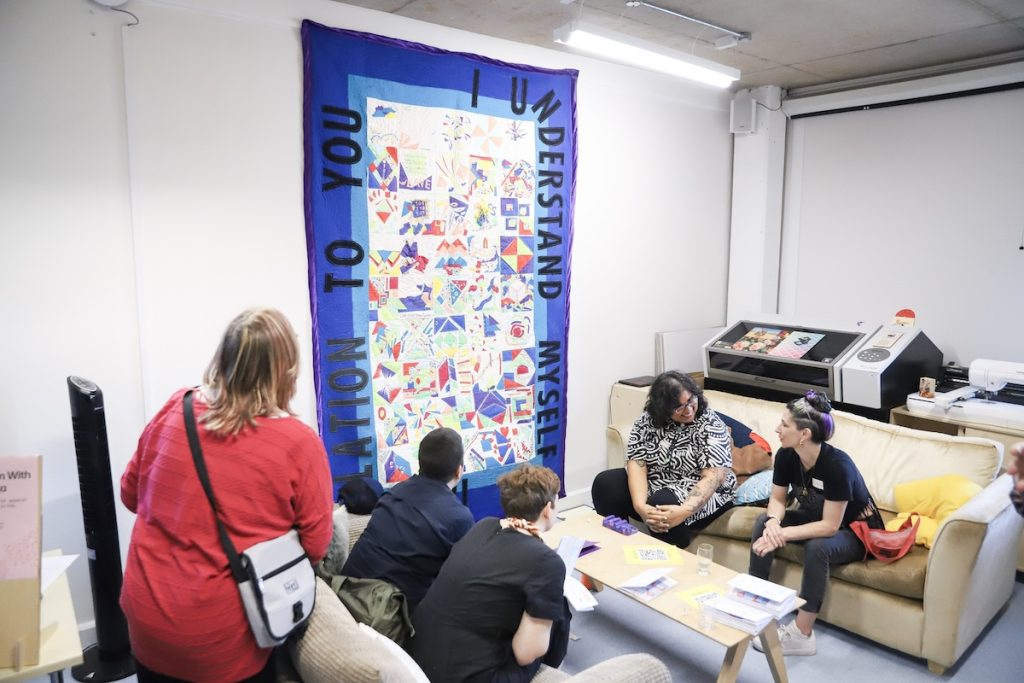
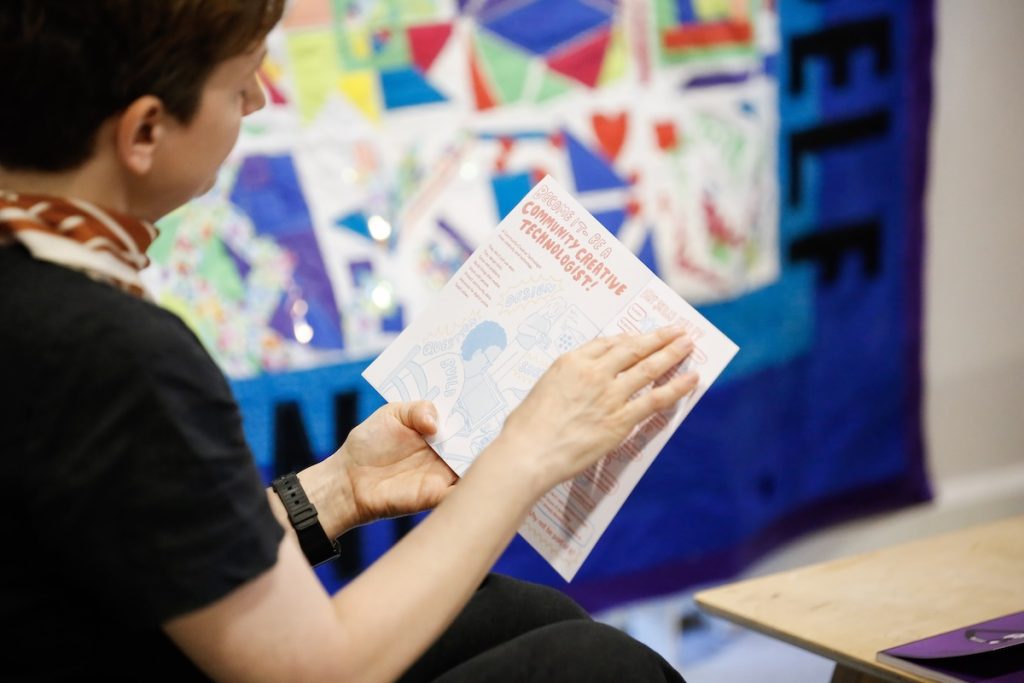
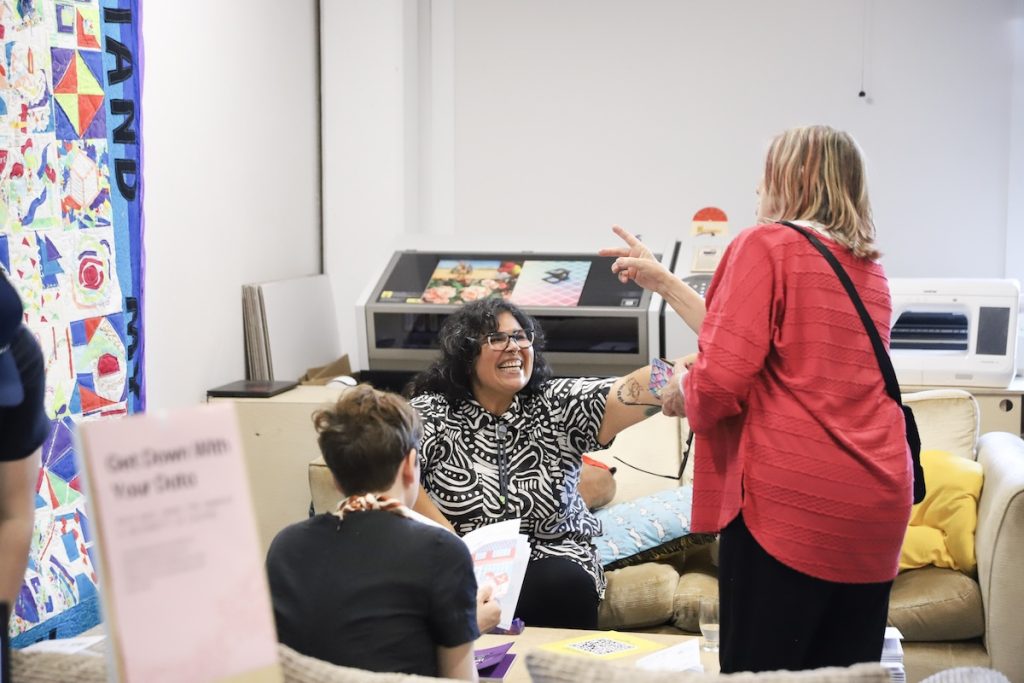
- Let’s Talk About Tech, Baby! – Mother Cyborg shared her zines and quilts about community tech and had conversations with people. These quilts, developed during her residency at KWMC, created space for storytelling, reflection and sharing lived experiences of technology.
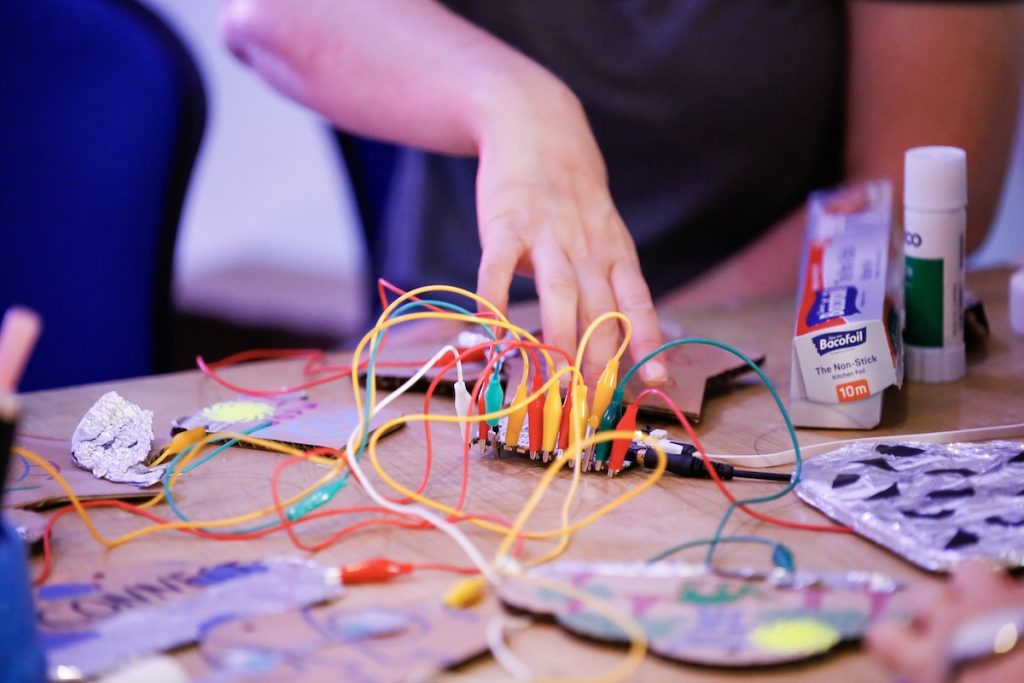
- Touch the Circuit & Connect – People explored what community connection meant to them while creating conductive cardboard objects that triggered sound, making electronics playful and tangible through making. Run by Chris and Dani (KWMC)
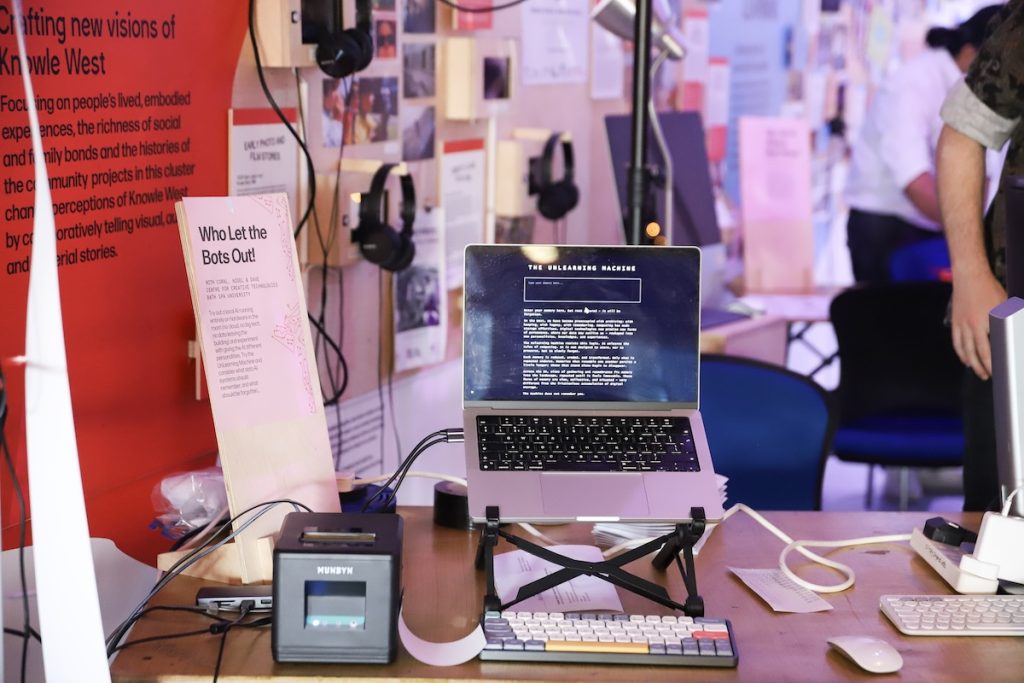
- Who let the bots out! – Participants experimented with a local AI running entirely on hardware in the room, exploring prompts, personalities, and questions around what data AI systems should remember or forget. This invited people to critically engage with AI and consider their role in shaping how it works. Run by Coral Manton, Dave Webb, Nigel Fryatt.
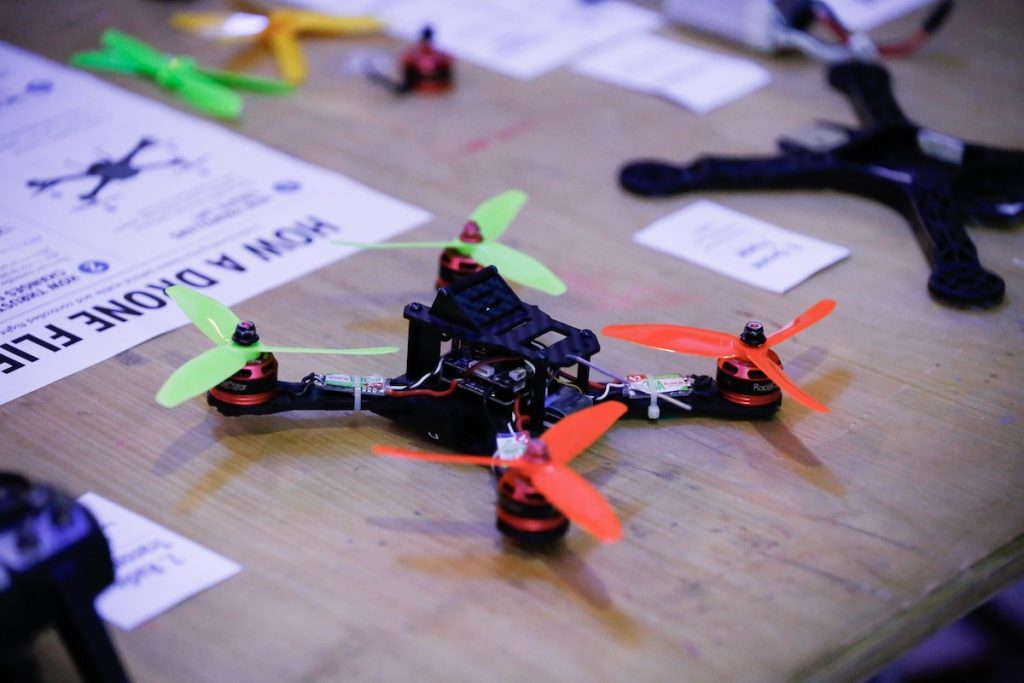
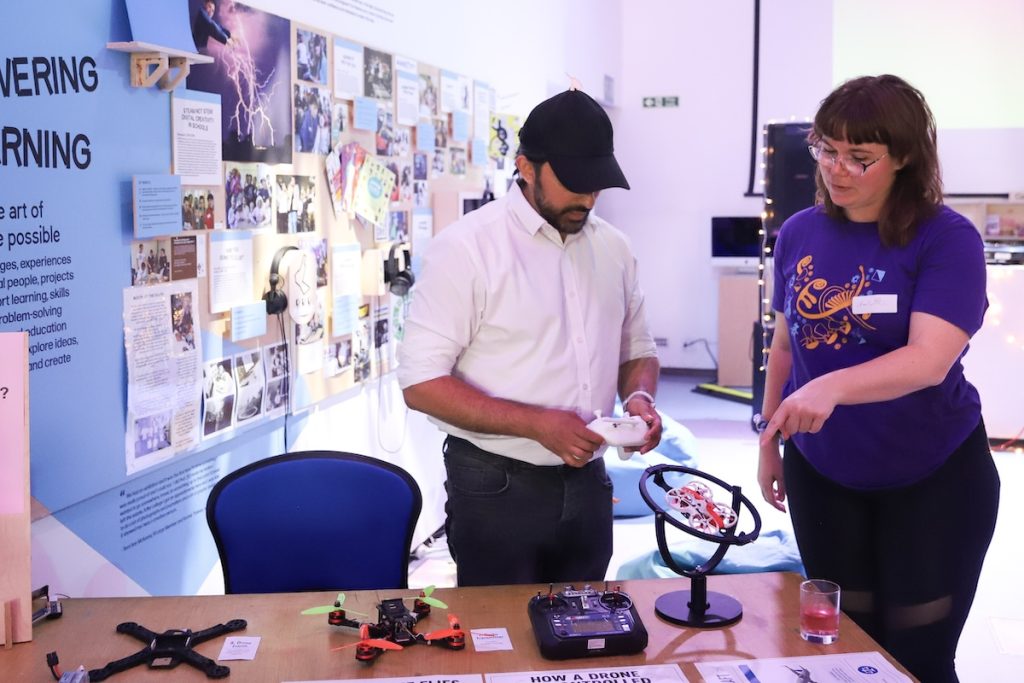
- Up, Up, and Away… But How? – People explored how drones stay in the air, getting hands-on with components and learning about the physics and technology behind flight. By breaking down complex systems into understandable parts, this station made technology more accessible and less intimidating. Run by Mo (KWMC).
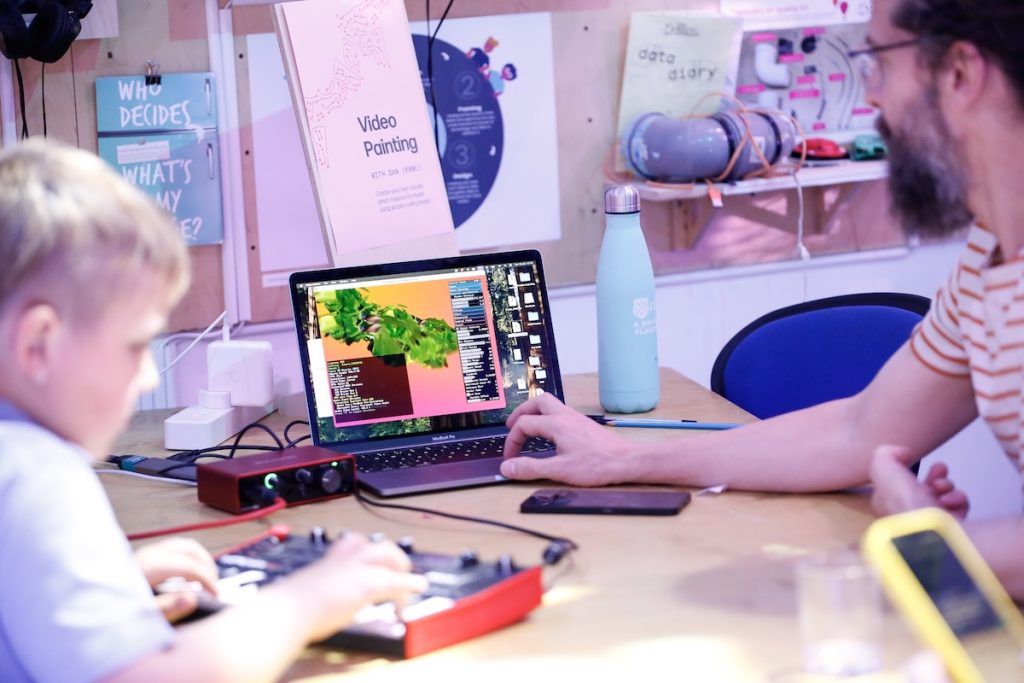
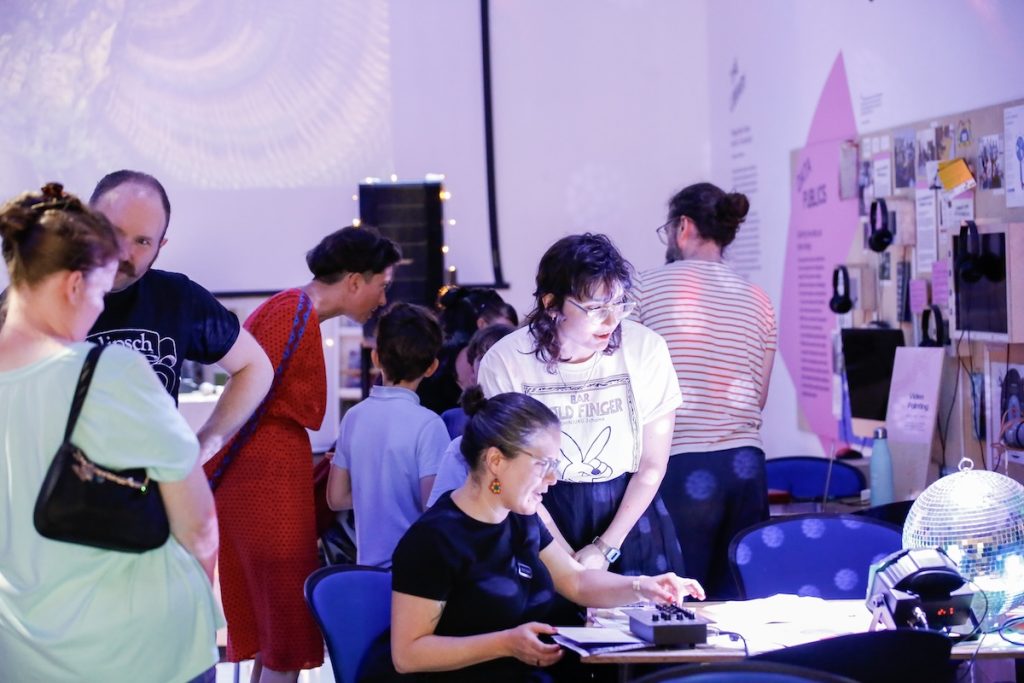
- Video Painting – Participants created music-responsive visuals using simple coding loops, projected into the space above the DJ. This opened up access to creative coding, enabling people to experiment and create their own forms of expression. Run by Dan (KWMC).
Common Ownership & Healthy Communities
Digital justice fuels the creation of knowledge, tools and technologies that are free and shared openly with the public.
Digital justice provides spaces through which people can investigate community problems, generate solutions, create media and organize together.
- Recipes for a Community-led Party – Musical Fruits shared DIY party culture, including how to build lighting, speakers and sound systems, alongside practical knowledge for organising your own events. This supported people to create and share their own infrastructure. Run by Haz Horobin-Worley.
- Get Down With Your Data – BASE (an anarchist community hub in Easton) offered practical, hands-on support to help people improve their online security and become a little safer and “less leaky” with their data. This helped people better understand, manage and take ownership of their own data.
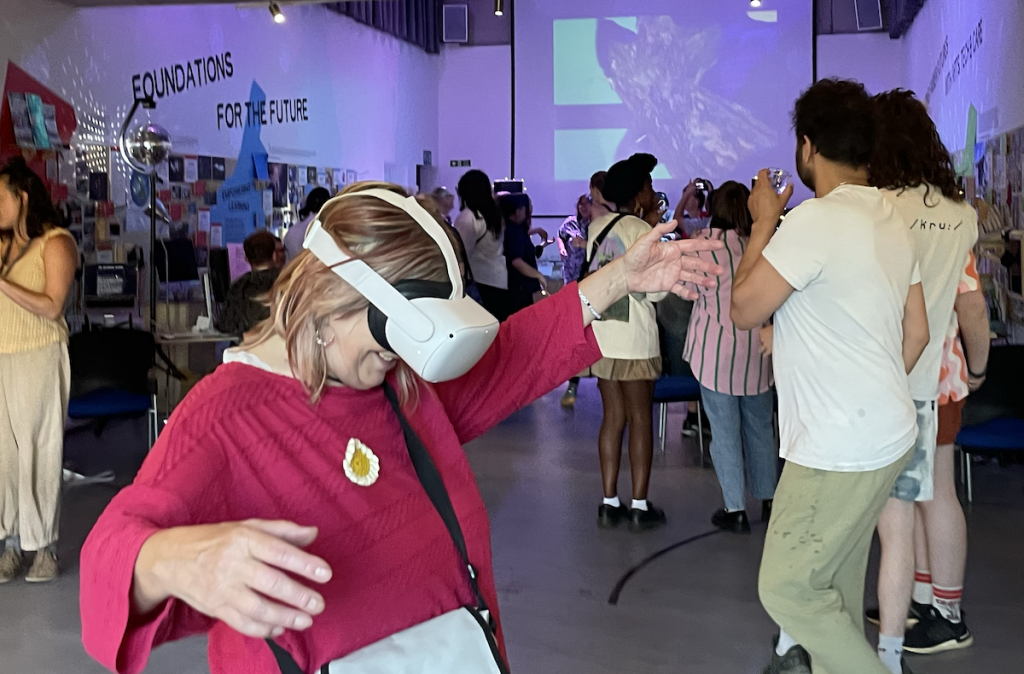
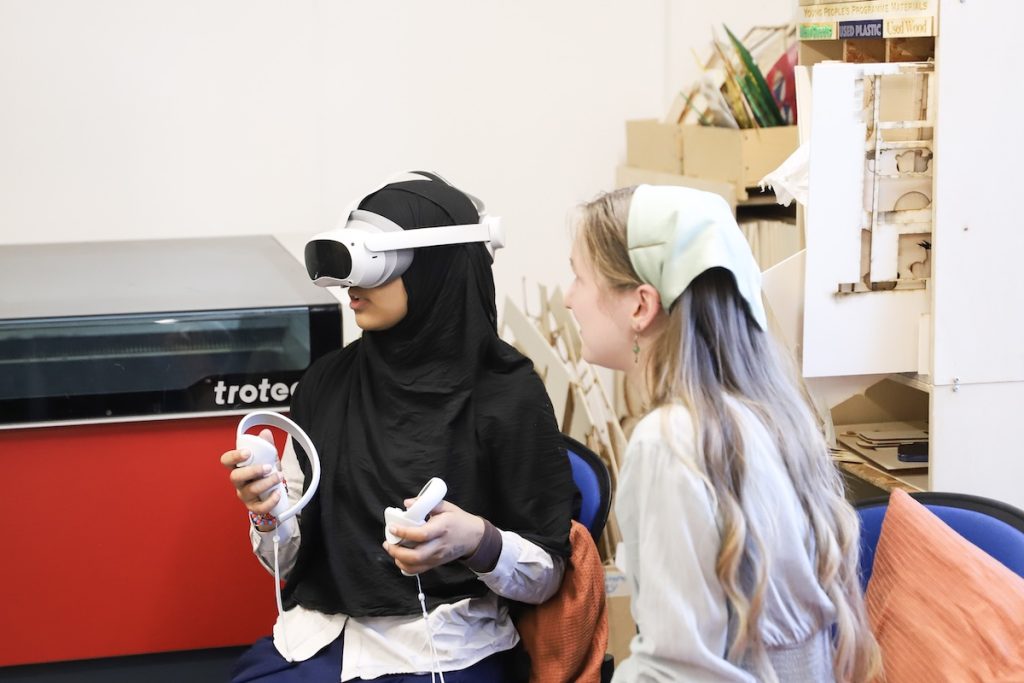
- Care in All Dimensions – Participants stepped into a gentle VR experience, drawing in 3D to explore what care means and imagining more caring virtual spaces. This invited reflection on how technology can support wellbeing and more compassionate digital futures. Run by Ella (KWMC).
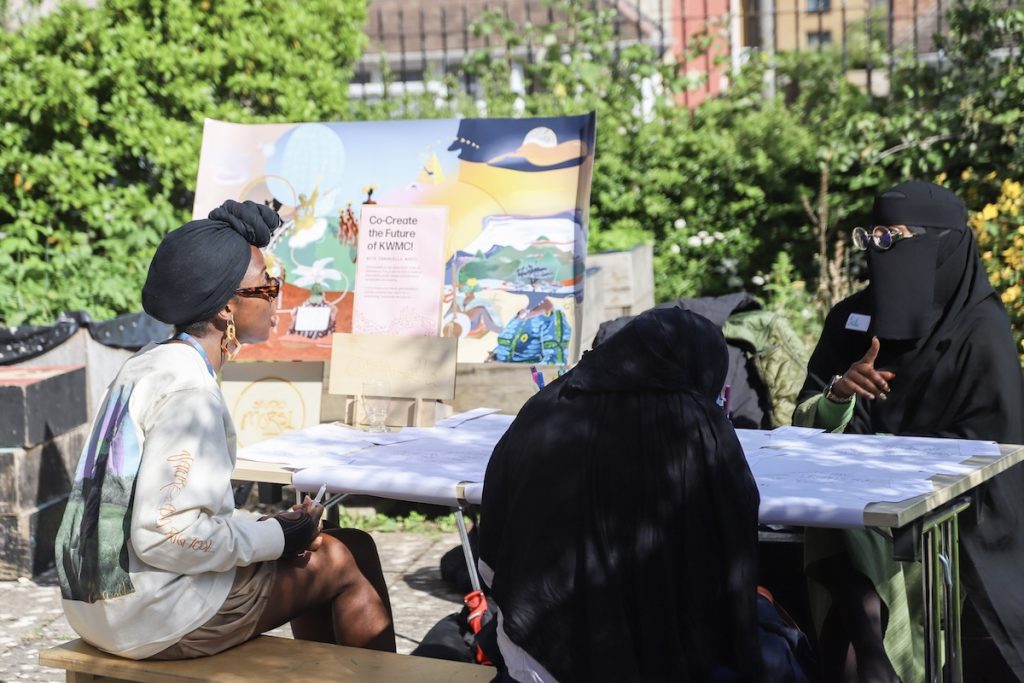
- Co-Create the Future of KWMC! – Emmanuella Morsi, our Open Door Artist in Residence, invited people to share ideas on making KWMC more welcoming and community-led – directly supporting people to shape the spaces and systems that affect them.
Our first DiscoTech was a big hit, with over 80 attendees coming to play with creative tech, chat, eat together and dance!
It’s amazing to see this format holding up so well 16 years later. Tech has evolved so much, but the DiscoTech approach – and the Digital Justice Principles that surround it – have only become more relevant.
In our current context of misinformation, corporate big tech and growing political division, we need spaces like this now more than ever. Spaces which demystify technology, make it accessible and understandable, and support people to move from being passive users to active participants and creators.
This is something KWMC and the Knowle West community have been doing for the past thirty years, but DiscoTech and the Digital Justice Principles have been invaluable for supporting us to further visualise and strengthen this approach. By continuing to bring people together in this way, we are building more informed, confident and connected communities and ensuring that technology works in service of people, not the other way around.
A massive thanks to Diana for sharing and training us how to run a discotech, Diana’s natural warmth, joy, honesty has been incredible to be around even just for a short time.
Get Involved
Want to run your own DiscoTech? Check out the DiscoTech How To Guide.
Join us on our mission! Follow KWMC on Instagram, Facebook, Bluesky and Linkedin and sign up to our monthly newsletter to hear about upcoming events and the latest news.
If you’d like to support our work, you can also donate or fund us. This makes a real difference, helping us keep our programmes free and open to the people who need them most.
Special thanks to our photographer Diego Maeso for capturing the night!