

Mental Health

Knowle West Media Centre (KWMC) held four-month leadership programmes called ‘The Change Creators’, inviting eleven young adults aged 18-25 to follow The Bristol Approach to develop a social campaign towards an issue they cared about. This group chose to explore whether creative interventions could improve mental health in young people better than traditional methods such as counselling.
KWMC is an arts organisation and charity that supports people to make positive changes in their lives and communities by using the power of digital technology and the arts.
Identifying
To discover whether creative interventions could improve mental health, the team needed to be able to measure different moods and feelings. They wanted to collaborate with creative technologists and product designers to create a sensor which could collect this data.
Framing
Some of the specific data questions the group were keen to answer included:
- Is it possible for sensors to measure changes in brain activity, identify mood or indicate positive feelings?
- Could a wrist sensor measure pulse or changes in body temperature and indicate bodily changes related to feelings?
- Is it possible to create sensors of any kind that can detect changes in mood or energy, such as when a person is feeling more positive or negative?
They visited various groups in Bristol to delve deeper into these issues.
Designing
The team designed a creative campaign which they called ‘It’s OK’. The aim of the campaign was to diversify mental health services for young people. They did this through a postcard survey and a sensing booth to collect different kinds of mental health data.
The sensing booth was designed to use facial recognition and video recording software to detect people’s facial reactions in response to three short films about mental issues. Eg. If a person reacted and smiled, the booth would sense they are ‘happy’.
The three videos consisted of: a young person who had a positive experience of dealing with mental health issues through creative workshops; a mental health specialist explaining reasons for diversifying the sector and why it currently isn’t diverse; and a spoken word artist sharing her story about dealing with mental health through spoken word.
Testing
The team set up their sensing booth in the ‘Creative Youth Network’ a youth organisation at the Station, central Bristol. They also toured the booth at the ‘Festival of Ideas’ at the Arnolfini.
Through the ‘It’s OK’ creative campaign, they engaged citizens predominately aged 16-24yrs to use the sensing booth to collect data on how people felt about mental health issues and how creative outlets could help.
The team also launched a series of postcards raising awareness about mental health issues, with a survey on the back to collect additional data from across the city. This included questions such as, “Please tell us one thing you’d like the Mayor of Bristol to do to diversify mental health provision in Bristol.”

Questionnaire created by the Change Creators group
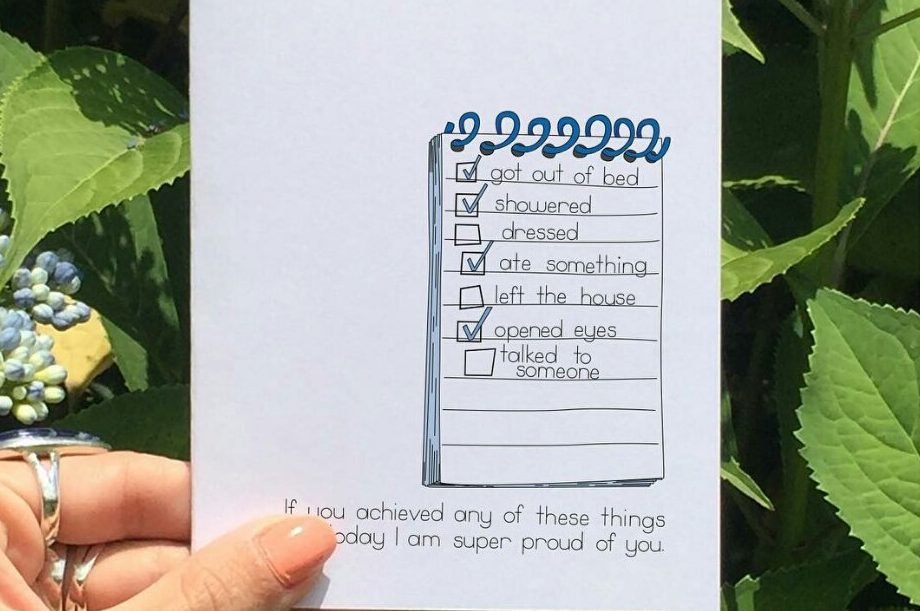
Postcard created by the team
Sharing
The group shared their findings by sending their collected data to the Mayor of Bristol plus doing a presentation and pop-up exhibition sharing their findings.

Presentation for the Mental Health project

Pop up exhibition exploring mental health
Reflecting
The team successfully raised awareness of mental health issues in young people across Bristol. They collected tangible and usable data in a playful and engaging way which helped to improve understanding of mental health plus provide Bristol City council with the data needed to spark change. The group also took part in workshops building their confidence and skills in leadership, creative technology, business and activism.



